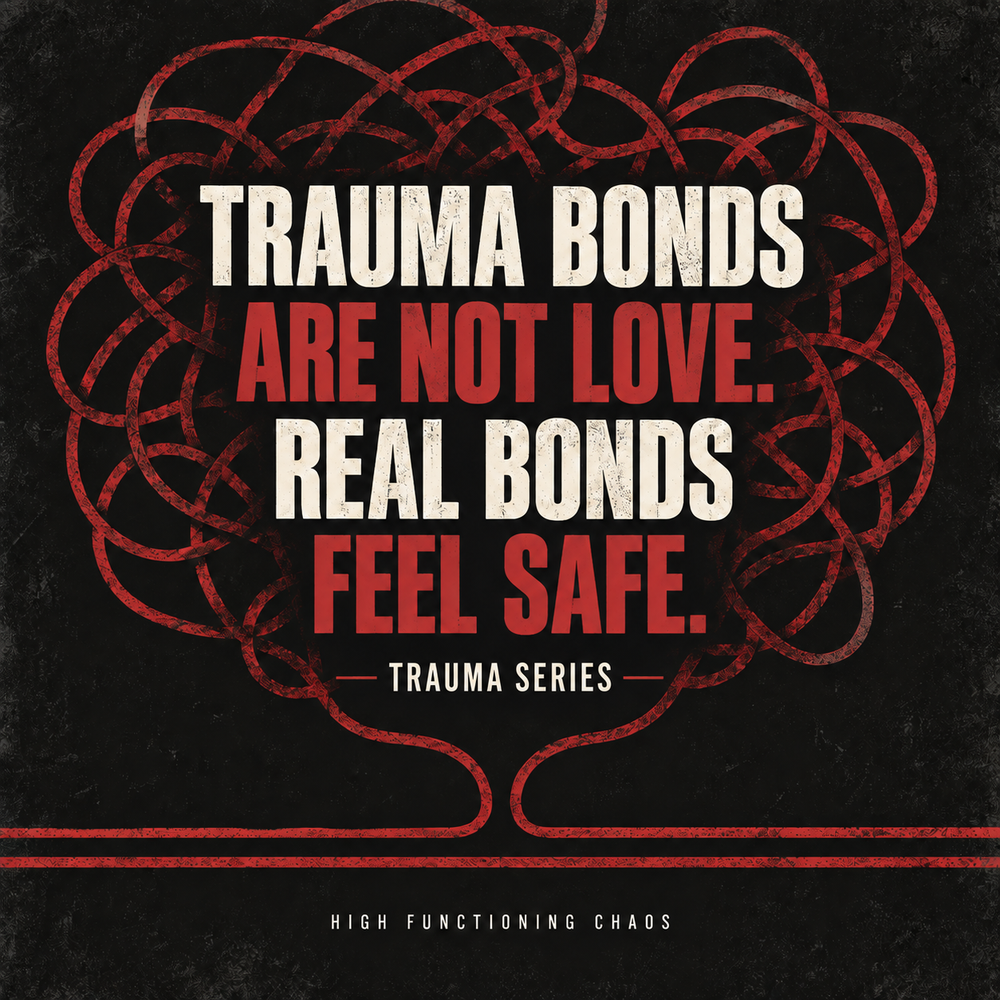
There is a weird kind of relationship confusion nobody really warns you about: when the person hurting you is also the person making you feel better afterward.
They hurt you. Then they apologize. They have a great day. They say exactly what you needed to hear. You feel relief. And somehow that relief can feel like love.
That does not mean you are weak, stupid, dramatic, or ‘just addicted to chaos.’ It means your nervous system learned to keep watching the person connected to both the pain and the relief.
That is basically what people mean by a trauma bond: a strong attachment that can form inside an abusive or controlling relationship, especially when the bad is mixed with affection, apologies, promises, good moments, and calm after the storm. Research has found that intermittent mistreatment and power differences can help explain why attachment can remain after someone leaves an abusive relationship. More recent research connects traumatic bonding with childhood maltreatment, insecure attachment, and PTSD symptoms. Dutton & Painter, 1993 Shaughnessy et al., 2023
And because the internet loves taking a real thing and running it into the ground, let’s be clear: trauma bonding is not just two people who have trauma getting close.
Two people can share hard experiences and understand each other deeply. That can be healthy. A trauma bond is about attachment formed inside a pattern of abuse, control, fear, and then relief. Big difference.
Also, being neurodivergent does not make somebody abusive, doomed in relationships, easy to manipulate, or incapable of knowing what love is. Full stop.
But it can make some of this stuff hit different.
Maybe you have ADHD and emotional intensity feels normal. Maybe rejection sensitivity makes conflict feel like the end of the world. Maybe you are autistic and spent years getting told you were too much, too blunt, too sensitive, too quiet, too weird, or somehow always missing what everybody else apparently got without an instruction manual. Maybe masking taught you to ignore your own discomfort because making other people comfortable felt more important.
Then somebody shows up with intense attention, a lot of validation, big emotions, and a whole lot of “nobody understands you like I do.”
Yeah. That can land hard.
Not because neurodivergent people are gullible. Not because we cannot love well. A lot of us have spent our whole lives decoding people, trying not to be too much, regulating ourselves around everybody else, and working our ass off to earn acceptance that should not have been conditional in the first place.
Research does show an association between ADHD and greater involvement in intimate-partner or sexual violence, including victimization. But association is not destiny, and it does not mean ADHD causes abuse. It means relationship education, boundaries, support, and safety planning need to be straightforward, shame-free, and actually usable. Arrondo et al., 2023
So what do you do when you realize you keep mistaking chaos for connection?
You do not fix it by forcing yourself to trust everyone. You do not fix it by pretending your nervous system is reacting for no reason. And you definitely do not fix it by loving an unsafe person harder until they magically become safe.
You start building real bonds by getting almost annoyingly serious about safety.
Real connection is consistent. It does not make you earn basic decency after somebody wrecks your peace. It does not punish you for having needs. It does not make you scared to bring something up. It does not use your diagnosis, trauma, money, kids, sex life, private information, or isolation against you.
A real bond has repair in it. Somebody can screw up, hear the impact, take responsibility, and actually change their behavior. Not give a beautiful speech, cry for three hours, buy flowers, and then run the exact same episode again next week.
A few things that can help
- Write down patterns, not just the big moments. After conflict, ask what happened, what was said, and what changed afterward. One sweet Tuesday does not erase six unsafe weeks.
- Make your needs specific. “I need space” can mean, “I need 30 minutes without texts, and we can talk at 7.” Clear does not mean needy. It gives safe people a chance to show they can respect a boundary.
- Build more than one safe connection. Trauma bonds get stronger in isolation. Friends, family, therapy, support groups, community—do not make one person your entire nervous system.
- Slow it down. Intensity is not intimacy. Let people be kind consistently over time. Love that survives real life usually has fewer fireworks and a lot more follow-through.
- Learn your body’s signals. Sometimes anxiety feels like attraction because anxiety is familiar. Before calling something chemistry, ask: Do I feel respected, calm enough to be myself, and free to say no? Or am I tense, obsessed, confused, and scared of messing up?
- Find support that understands trauma and neurodivergence. You should not have to choose between someone treating your trauma seriously and someone understanding that communication, sensory needs, executive function, and recovery might look different for you.
If there is abuse, threats, stalking, coercion, sexual pressure, financial control, isolation, or fear involved, the goal is not to fix the bond with that person. The goal is safety. Leaving can be complicated and risky, which is why a personalized safety plan matters. The National Domestic Violence Hotline has confidential support and safety-planning tools at thehotline.org or 800-799-SAFE (7233). If you are in immediate danger, call 911.
Real love should not feel like surviving an escape room somebody built specifically to keep you confused, then called it ‘passion.’
It can still be deep. It can still be passionate. It can still be neurodivergent, messy, loud, awkward, soft, intense, and completely yours.
But it should leave room for you to stay yourself.
This post is for reflection and education, not a diagnosis. If trauma symptoms are making daily life hard, a trauma-informed mental-health professional can help.